Can you day trade around a full-time job?
 Ahoy there, Trader! ⚓️
It’s Phil…
Yes. About five minutes a day.
That is the honest answer to a question most retail trading content treats as either fantasy or fraud: can a busy professional realistically day trade around a full-time job?
The fantasy version sells you screens, chat rooms, and the dopamine of being plugged in for ten hours. The fraud version sells you a course that quietly assumes you have nothing else going on. Neither describes what real day trading around a real career actually looks like.
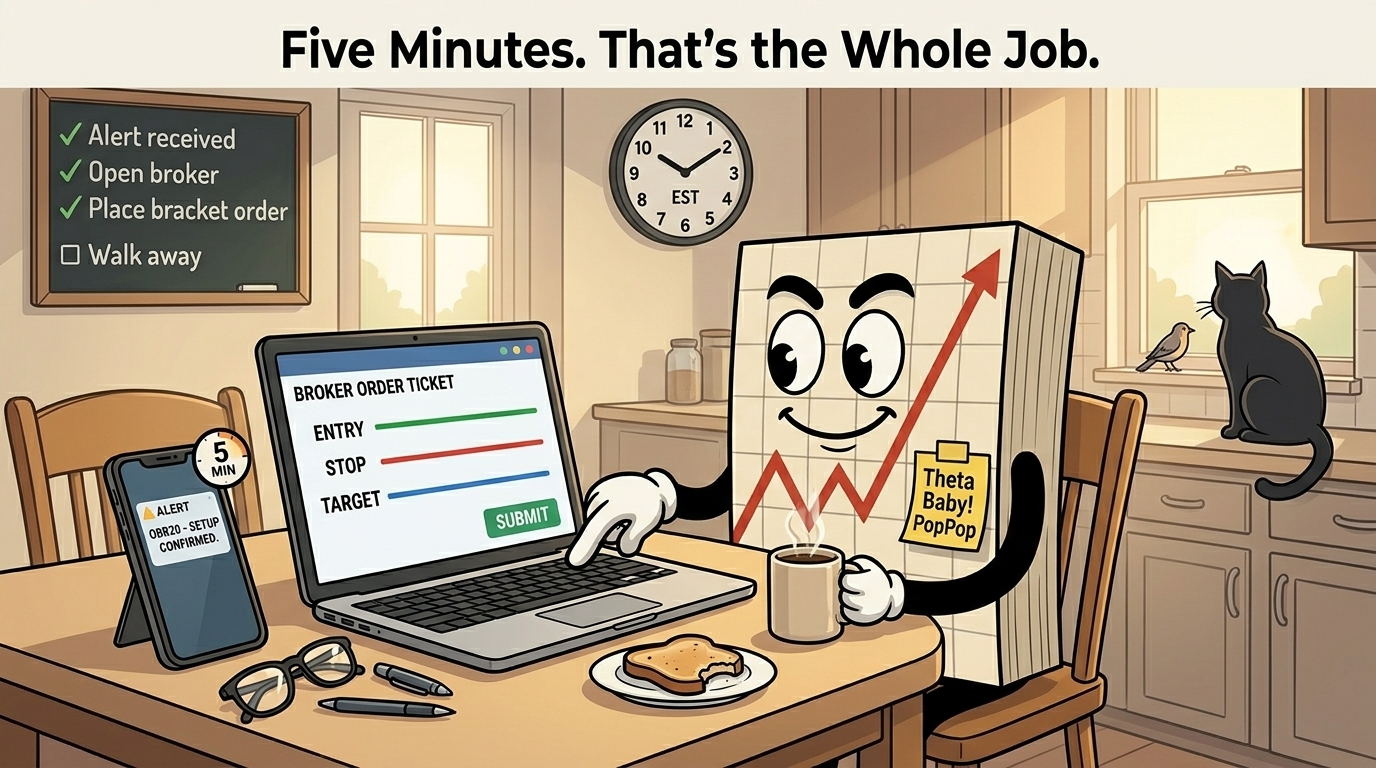
Real day trading around a working life looks like this. You get an alert from your software. You open your broker. You place a trade with a stop loss and a profit target baked into a bracket order. You walk away. The trade either hits the target or the stop, and you find out at the next break in your day. Total time at the wheel: about five minutes.
The rest of this guide explains why that is achievable, why it is uncommon, and what you have to believe and do to make it work.
Two warnings before we go further.
If you came here looking for a way to gamble in ten-minute chunks while pretending it is investing, you are in the wrong place. Discretionary day trading without a system will blow your account up faster than a r/wallstreetbets account during a pump and dump. That is not a metaphor for entertainment value. It is the predictable arithmetic of asymmetric decision-making under time pressure.
If you came here looking for a magic indicator, a guaranteed return, or a way to make six figures from your phone in thirty days, you are also in the wrong place. Nothing here promises any of that. What is here is a practical framework built by someone who had no other option, refined over two decades, and used daily by people with day jobs they have no intention of quitting.
That is the deal. Here is how it works.
Get The Complete Premium Popper System – Automation Included
Your entry ticket to consistent SPX income. Inside: the exact setup, rules, and checklists I trade daily – for less than the cost of lunch. Easily actionable.
Get The Premium Popper System – Click Here
The Reason This System Exists
This framework was not built by someone selling a dream. It was built by someone who had no other option.
Back in the early 2000s, a major Crohn’s flare-up put me in hospital for two months.
I had been trading full-time since 2000/01, straight into what you would call a prop shop today, trading black box systems. I had been studying markets since I was 15, hand-drawing charts before most people had a computer. Trading was everything I knew.
Then my body shut down.
While I was in that hospital bed, genuinely ill and unable to work properly, my employer walked in, handed me my walking papers, and said good luck. Goodbye.
So there I was. Sick. No job. A £1,000 trading account. And the only skill set I had.
I did the only thing I could. I started trading morning breakouts from home. Forex. Futures. Anything that moved at the open. Housebound, unwell, working with next to nothing.
That period of necessity, not ambition, not strategy, but pure survival, forced me to build something that worked without requiring me to be at a screen all day. It had to be simple. It had to be repeatable. It had to work even on the days I was not at my best.
What I built then became the foundation of everything I trade today.
It is also why I favour short-term payout cycles from mechanical, low-maintenance trading systems. Not because they make me feel sophisticated. Because they let me keep trading on the days my body has other ideas.
Here is the part that matters for anyone reading this with a full-time job.
The constraint that built this framework happens to be the same constraint most working people face every single day. You do not have all day to stare at charts. You have a window. Maybe two. The system that works for someone who cannot reliably be at a screen also works for someone who is not allowed to be at a screen because they are at work.
The constraint is the feature, not the bug.
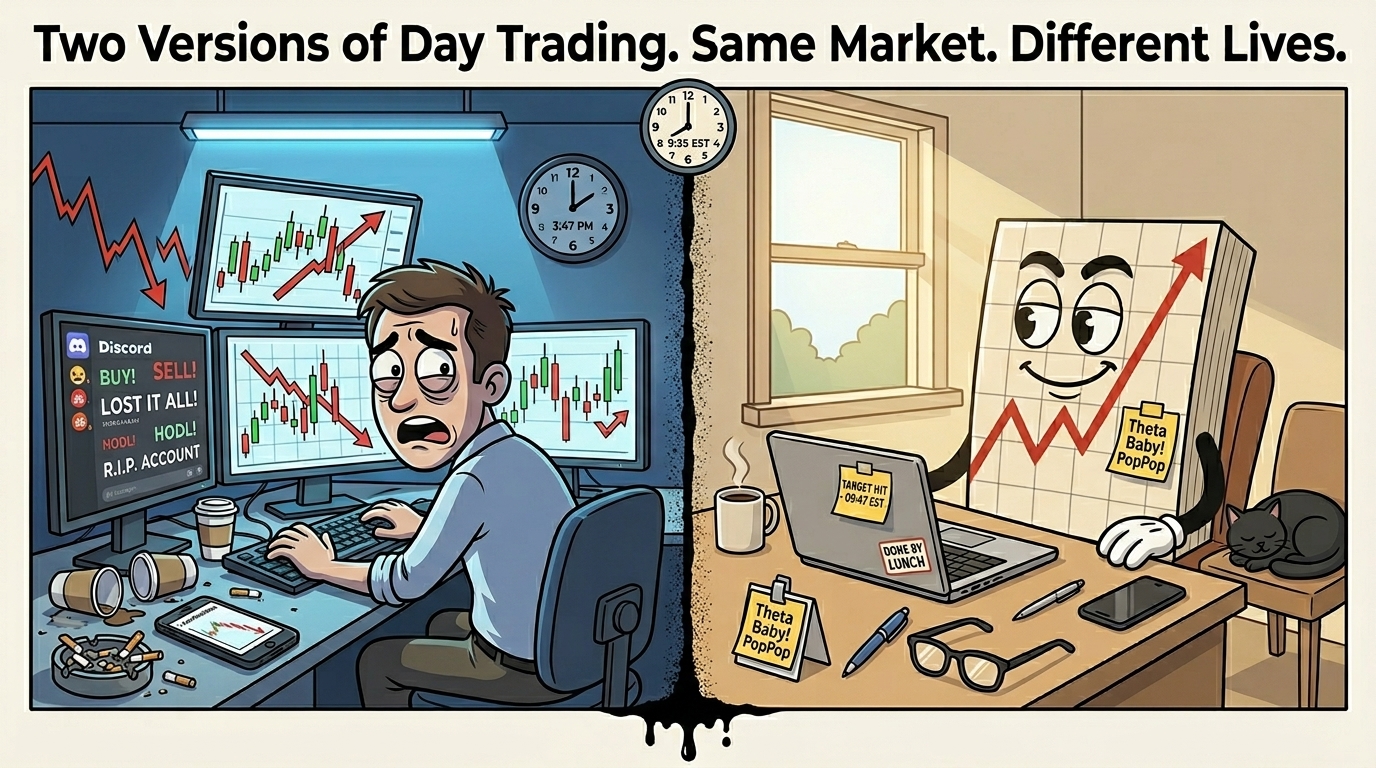
Two Versions of Day Trading
When people say “day trading” they usually mean one of two completely different activities, and most beginner content fails to distinguish them.
Version A: The Make It Up As You Go Method
This is the version you see on social media. Multiple monitors. A chat room ticker on the side. Three coffee cups. A trader hunched over the screen reacting to news, hot takes, and whatever the loudest voice in the discord just said.
The decisions are made in the moment. The entries are based on gut feel dressed up as price action analysis. The stops, if there are any, get moved when the trade goes against the trader. The position size depends on how confident the trader feels. Confidence depends on whether the last trade won.
This version of day trading is genuinely addictive. It mimics the input pattern of a slot machine: variable reward at unpredictable intervals. It is also financially fatal for the overwhelming majority of people who try it. The only people who consistently make money from this style of trading are the brokerage operators charging commission and the platform algorithms harvesting the spread.
Discretionary day trading without a system will blow your account up faster than a r/wallstreetbets account during a pump and dump. Not because the people doing it are stupid. Because the activity itself is structurally biased against them.
Version B: The Mechanical Method
This is the version this guide is about.
The decisions are made before the market opens. The entry conditions are defined. The stop loss is defined. The profit target is defined. The position size is defined. None of those things move once the trade is on.
Software watches the market and pings an alert when conditions match. The trader looks at the chart for confirmation that the conditions are clean, opens the broker, places a bracket order, and walks away.
The trader is not the watcher. The software is the watcher. The trader is the executor.
This version of day trading is genuinely boring. Done right, it should feel about as exciting as paying a utility bill. The drama, if there is any, comes from looking at the account balance at the end of the month and noticing it has gone up while you were doing your actual job.
The rest of this guide assumes Version B. If you want Version A, there are easier and cheaper ways to gamble.
Why Mechanical Beats Discretionary for People with Day Jobs
The argument for mechanical trading is not “it is morally superior.” The argument is “it is the only version that survives contact with a real working life.”
Here is what mechanical trading asks of you, and what it gives back in exchange.
Be Mechanical
Decisions made in advance are better than decisions made in the moment. Always. This is not a controversial claim in any other field. Surgeons follow checklists. Pilots follow checklists. Professional athletes drill the same movements until the conscious mind drops out of the loop.
The reason is the same reason it applies to trading. Under pressure, the brain reverts to whatever is easiest, not whatever is correct. The easiest thing in a moving market is to do whatever protects your ego in the next thirty seconds. The correct thing is to do whatever positive expectancy says works over the next thirty trades.
You will not be in a position to know the math when the market is open and you are trying to remember a client meeting in eleven minutes. Make the decisions in advance.
Follow the Rules
The rules exist because they work over a large sample of trades. They will not work on every individual trade. Nothing works on every individual trade. The rules work when applied consistently across enough trades to let positive expectancy do its job.
Following the rules on the trades you fancy and ignoring them on the trades you do not is not a strategy. It is a way to take the worst of both worlds. You get the boredom of a system without the protection of one.
Do Not Second-Guess
You are not smarter than the system. Neither am I. The system is a distilled summary of what has worked across thousands of historical instances of the same pattern. Your intuition is a distilled summary of the last three trades you did, weighted toward whichever one made you feel strongest.
When the alert pings and the chart shows the setup is clean, take the trade. When the alert does not ping, do not take the trade. The second-guessing is the part where the account gets blown up.
Leverage Software
You do not have time to watch the market. Software does. Charting platforms can scan for your specific setup conditions across multiple instruments and alert you the moment they appear. I use TradingView for charts and alerts. Modern brokers accept bracket orders that fire the entry, stop, and target as a single instruction. I use TastyTrade for options execution because the bracket order infrastructure is reliable and the spread costs are competitive. The trade lives or dies without you babysitting it.
The trader in this model is not a watcher of charts. The trader is the manager of a small operation that the software runs on their behalf. The skill is in setting the rules, picking the trade when the alert fires, and resisting the urge to override the system the moment it goes against you on a single trade.
That is the deal. Define the rules in advance. Let software watch. Execute when alerted. Walk away.
The Realistic Daily Workflow
The US cash open is at 9:30 EST. That is the anchor for the entire framework. Most of the price action that matters for day trading the major US indices happens in the first 30 to 60 minutes after that bell.
The workflow is simple. Check in. Check for the trade. Check out. Done by lunch and the rest of the day is yours.
Here is what that looks like minute by minute.
Pre-market (T-10 to T-0): orientation, 10 minutes. Glance at overnight futures. Note any major economic data due that day. Check whether anything has happened in Asia or Europe that has moved positioning. None of this is the decision. The decision will be made by the rules when the alert fires. This is just orientation, and it can happen alongside breakfast or a school run.
The open (0 to 10 minutes after the bell): check in. Confirm the pre-market context still holds. Confirm the session is behaving like a tradeable market and not a coin flip. If it looks off, you sit out. Knowing when to sit out is a skill, not a weakness. A professional who cannot leave a board meeting to manage a volatile position on a Fed day has no business holding one. Passing cleanly is better than entering badly.
The setup window (10 to 25 minutes after the bell): check for the trade. This is when the opening range completes and the system either flags a setup or does not. If a setup fires, look at the chart. Confirm the conditions are clean. Place the trade with the entry, the stop loss, and the profit target as a single bracket order. Submit.
If no alert fires, there is no trade today. That is a feature, not a bug. The system does not force you into a trade because you have time available. The system trades only when the conditions are met.
The close-out (25 to 30 minutes after the bell): check out. Confirm the bracket order is sitting correctly with the broker. Close the platform. The trade is now live on the broker’s infrastructure, not your attention. The stop will close it for a defined loss if the trade goes against you. The target will close it for a defined profit if the trade goes in your favour. Either way, you are no longer needed.
The rest of the day: nothing. Go back to whatever you were doing. You may glance at the trade at lunch. You may not. The outcome is the outcome either way.
That is the framework. The full workflow runs about 30 minutes from pre-market prep to close-out. Within that 30 minutes, the active execution, the part where you are actually at the broker placing the trade, is closer to five minutes. The rest is orientation and discipline that can run alongside whatever else you have going on that morning.
Compare this to the version of day trading you see online, where the trader sits glued to a screen for the entire session, missing setups while staring at the ones they are already in, mentally exhausted by the time the close arrives.
Same activity. Completely different time profile. The difference is whether you decided in advance or are deciding in the moment.
What “Done by Lunch” Actually Looks Like
The case for this framework is not theoretical. There is a public record of working people executing it, week after week, alongside their full-time careers and family lives.
It lives on the AntiVestor Student Edge Wall of Wins. The full archive is at antivestor.com/student-edge.
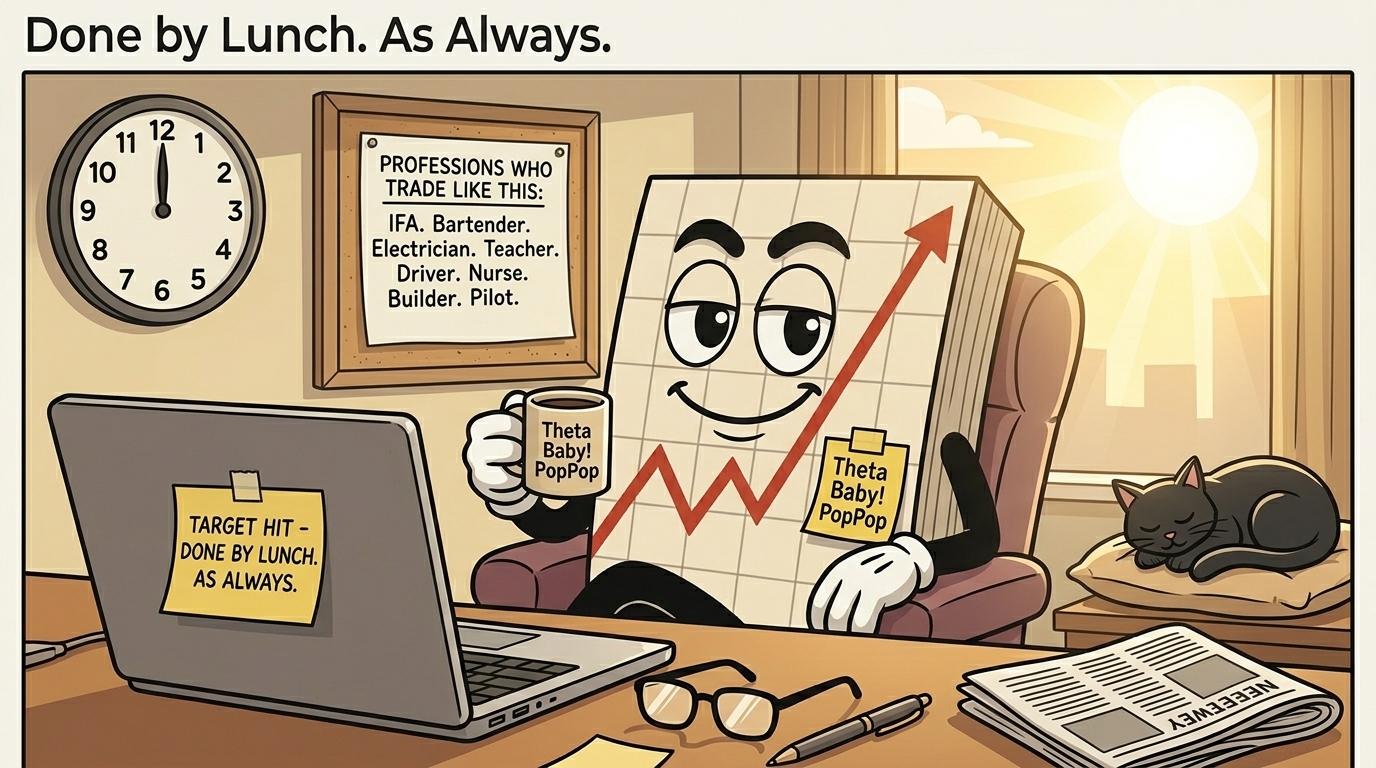
What you find there is not a curated highlight reel of monster trades and four-figure days. It is a weekly catalogue of mostly ordinary, mechanically executed trades placed by people in oil and gas, financial services, hospitality, the trades, healthcare, IT, education, the construction industry, transport, and every other category of working life you can think of.
These are not professional traders. They are people who use the framework around their actual job. They get the alert during their commute or on a break, place the trade, and get on with their morning. The win or the loss is recorded by the time they finish their first task of the day.
The reason this works for such a broad cross-section of professions is that the framework is agnostic to what you do for a living. It does not require you to be a finance professional. It does not require you to have a quiet office. It does not require you to have hours of free time. It requires you to be able to look at your phone or a laptop screen for about five minutes when the software tells you to.
If you can do that, the framework does not care what you do for a living.
The Wall of Wins is the receipts. It is not a sales document. It is a published, ongoing, weekly record of real trades executed by real members. You can verify it for yourself.
The Rules That Keep You Alive
The framework is the easy part. Anyone can be taught a setup. The hard part is the behavioural rules that keep you executing the framework after the inevitable losing trade, the inevitable losing week, and the inevitable stretch where the market refuses to do what your system likes.
Four rules. None of them are clever. All of them are mandatory.
Trade Small and Consistently
Position size is the variable that destroys more accounts than any other. The way it destroys them is rarely a single bad trade. It is the slow drift toward bigger positions after a winning run, followed by an oversized loss that erases six months of work.
Industry convention says risk no more than 1 to 2 percent of your account on any single trade. That is the practical rule. It works as a baseline for “do not bet the farm and lose your shirt.”
But there is something more practical that the percentage rule misses. Use a position size that lets you sleep at night. I call this your emotional bank balance.
Here is the test. If you are sweating during a trade, if you cannot leave the charts alone, if your heart races every time the price moves a tick, your position size is too big. Emotionally. Even if you can practically afford the loss. Even if the math says you have ten times the capital sitting there to cover it. The emotional bank balance is not yet in line with the practical account balance.
The solution is to reduce position size. Keep reducing it until you can become almost aloof to any individual outcome. The goal is to reach the size at which you can logically follow your rule-defined trading system without your emotions overriding it.
When you are aloof, you execute the rules. When you are anxious, you override them. The size at which you stop overriding is the right size for now. As your emotional bank balance grows alongside your practical one, the size you can comfortably trade grows too.
This is a more useful measure of “what size to trade” than any percentage rule, and it is what I tell every new trader in the AntiVestor community to use.
Trade the same size every time at whatever your current emotional bank balance allows. Resist the urge to “press” when things are going well, because the version of you that presses on a winning streak is the same version of you that revenge-trades on a losing streak, and you do not want either one anywhere near your account.
One Bad Trade Does Not Make a Bad System
The system will produce losing trades. By design. A strategy with a 70 percent win rate has 30 losing trades out of every hundred. Those losing trades are not bugs. They are part of the cost of doing business.
The mistake is to look at a single losing trade and conclude the system is broken. The correct response to a losing trade is the same as the correct response to a winning trade: take the next signal the system gives you, executed mechanically, sized identically.
The best revenge for a losing trade is the next trade the system tells you to take.
Do Not Make It Up As You Go Along
There is a specific failure mode where a trader takes a few mechanical trades, gets bored, decides they have “got the hang of it,” and starts adding their own ideas. The new ideas are not tested. They are not sized correctly. They are not based on anything beyond a feeling that this particular setup looks promising.
This is the path back to Version A. It is also the path to a blown account.
If you want to trade a new setup, build it as a system, test it, and integrate it deliberately. Do not bolt your gut feel onto a mechanical framework and hope for the best.
The Market Rewards Discipline, Not Excitement
Everything works some of the time. Nothing works all of the time. The way you make money in this business is not by finding the strategy that always wins. There is no such strategy. The way you make money is by executing a strategy with positive expectancy, consistently, across enough trades to let the expectancy compound.
Excitement is the enemy. Every interesting feeling you have about the market is a signal to stop and check whether you are about to do something stupid. The market does not pay a premium for emotional engagement. It pays a premium for showing up, executing the rules, and going back to your life.
The mantra is simple. Do less stupid shit, not more clever shit.
Where to Start If You Want a System Without Building One
The honest answer depends on where you are. Three options, in order of commitment.
Option One: Watch How It Works (Free)
If you are not ready to commit anything yet, start by reading the daily Analysis Edge briefing. It applies the framework to live market conditions every trading day. Pre-market context. The live trades when they fire. Post-trade review when the day closes. No paywall. Read it for a few weeks and decide whether the approach fits how you think.
The briefing lives at antivestor.com/analysis-edge.
Option Two: Build Your Own
This is doable. It takes time, capital, and a willingness to accept that your first three iterations will not work. You will need to define your setup, code or chart it, backtest it across enough data to be confident it has positive expectancy, paper-trade it until you trust it, and then live-trade it small until the live results match the backtested results.
This is the right path for some people. It is not the right path if you are short on time, capital, or the inclination to spend a year researching when you could be trading.
Option Three: Use a System That Already Works
Premium Popper is the mechanical day trade I built for exactly this audience. It is rules-based. The setup conditions are defined. The entry, stop, and target are defined. The trade lives inside the first 30 minutes after the US open. Software alerts you when the conditions are met. You execute. You walk away.
It is the system that came out of the Crohn’s flare-up. It is the system that the Wall of Wins is built on. It is the system used daily by people from every profession listed earlier in this guide.
The full details, the entry criteria, the rule set, and how to access the alerts are at antivestor.com/premium-popper.
Read the briefing first. Build your own if you have the time. Use mine if you do not. Whichever option fits, the message of this guide is the same. Day trading around a full-time job is achievable, but only if you accept that the version that works is the boring, mechanical, five-minute version, not the one being sold to you on social media.
FAQ
Can you day trade with a full-time job?
Yes, if you trade mechanically and let software do the watching. A rules-based setup with bracket orders takes about five minutes to execute once an alert fires. It is incompatible with discretionary, chart-watching day trading, which assumes you have hours of attention to spare. Discretionary trading and a demanding career are not compatible. Mechanical trading and a demanding career are.
How many hours a day does day trading take?
The mechanical version takes about five to ten minutes a day on the days a setup fires. On days no setup fires, it takes zero minutes. Pre-market orientation takes another five to ten minutes if you choose to do it. The total weekly time commitment is usually under an hour, not the eight to ten hours per day implied by social media trading content.
Do you need to watch markets all day?
No. Watching the market all day is incompatible with having a job, and is also not how mechanical trading works. The software watches the market. You respond when alerted. The rest of the time, the market does whatever it does without your attention. The framework is built on the assumption that you have a life and the market is happening somewhere else.
What is the minimum capital to start?
It depends on the instrument, the broker, and the position size you are comfortable with. Options markets have lower capital requirements than futures. Defined-risk strategies have lower capital requirements than undefined-risk ones. The honest answer is to start with capital you can afford to lose entirely, trade small enough that no single loss is painful, and scale only once the system has proven itself with real money in your hands.
Can you trade during a lunch break?
The setup window for the framework described here is the US cash open at 9:30 EST. If your lunch break aligns with the early part of the US session, yes. If your lunch break is later in the day, the trade will already have closed before you eat. Either way, the execution itself fits comfortably inside a short break.
The Bottom Line
The question this guide opened with was: can you day trade around a full-time job?
The answer, on the evidence of the people doing it daily, is yes.
The version of day trading that fits a working life is mechanical, rules-based, software-alerted, and bracket-managed. The version that does not fit a working life is the one being sold to you on social media. Pick the right version and the time commitment shrinks to about five minutes a day. Pick the wrong version and you will blow up faster than you can explain to your partner where the money went.
Read more – 7 Trading Tips for Busy Professionals
If you want a system that already works, Premium Popper is at antivestor.com/premium-popper.
If you want the evidence that real working people use it, the Student Edge Wall of Wins is at antivestor.com/student-edge.
The market opens at 9:30 EST. It does not care whether you are watching. The framework is designed so you do not have to.
Get The Complete Premium Popper System – Automation Included
Your entry ticket to consistent SPX income. Inside: the exact setup, rules, and checklists I trade daily – for less than the cost of lunch. Easily actionable.
Get The Premium Popper System – Click Here
Happy trading,
Phil
Less Brain, More Gain
…and may your trades be smoother than a cashmere codpiece
p.s. There are 3 ways I can help you…
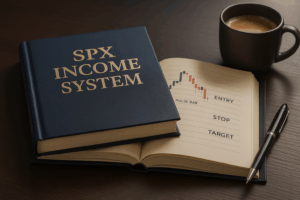
- Option 1: The SPX Income System Book (Just $12)
A complete guide to the system.
Written to be clear, concise, and immediately actionable.
>> Get the Book Here
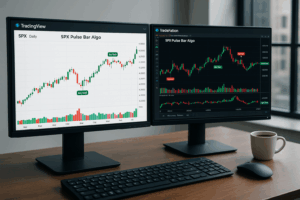
- Option 2: Full Course + Software Access – 50% off for Regular Readers – Save $998.50
Includes the video walkthroughs, tools for TradeStation & TradingView, and everything I use daily. Plus 7 additional strategies
>> Get DIY Training & Software
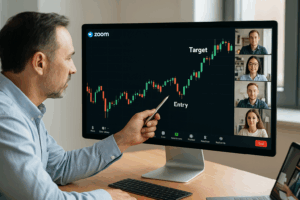
- Option 3: Join the Fast Forward Mentorship – 50% off for Regular Readers – Save $3,000
>> Join the Fast Forward Mentorship – trade live, twice a week, with me and the crew. PLUS Monthly on-demand 1-2-1’s
No fluff. Just profits, pulse bars, and patterns that actually work.
Disclaimer
This article is for educational purposes only and does not constitute financial, investment, tax, or legal advice. Trading involves substantial risk including the risk of total loss of capital. Past performance is not indicative of future results. No strategy, system, or service mentioned in this article guarantees profit or protects against loss. Always consult an appropriately licensed financial professional before making any trading or investment decision based on your own circumstances, objectives, and risk tolerance.